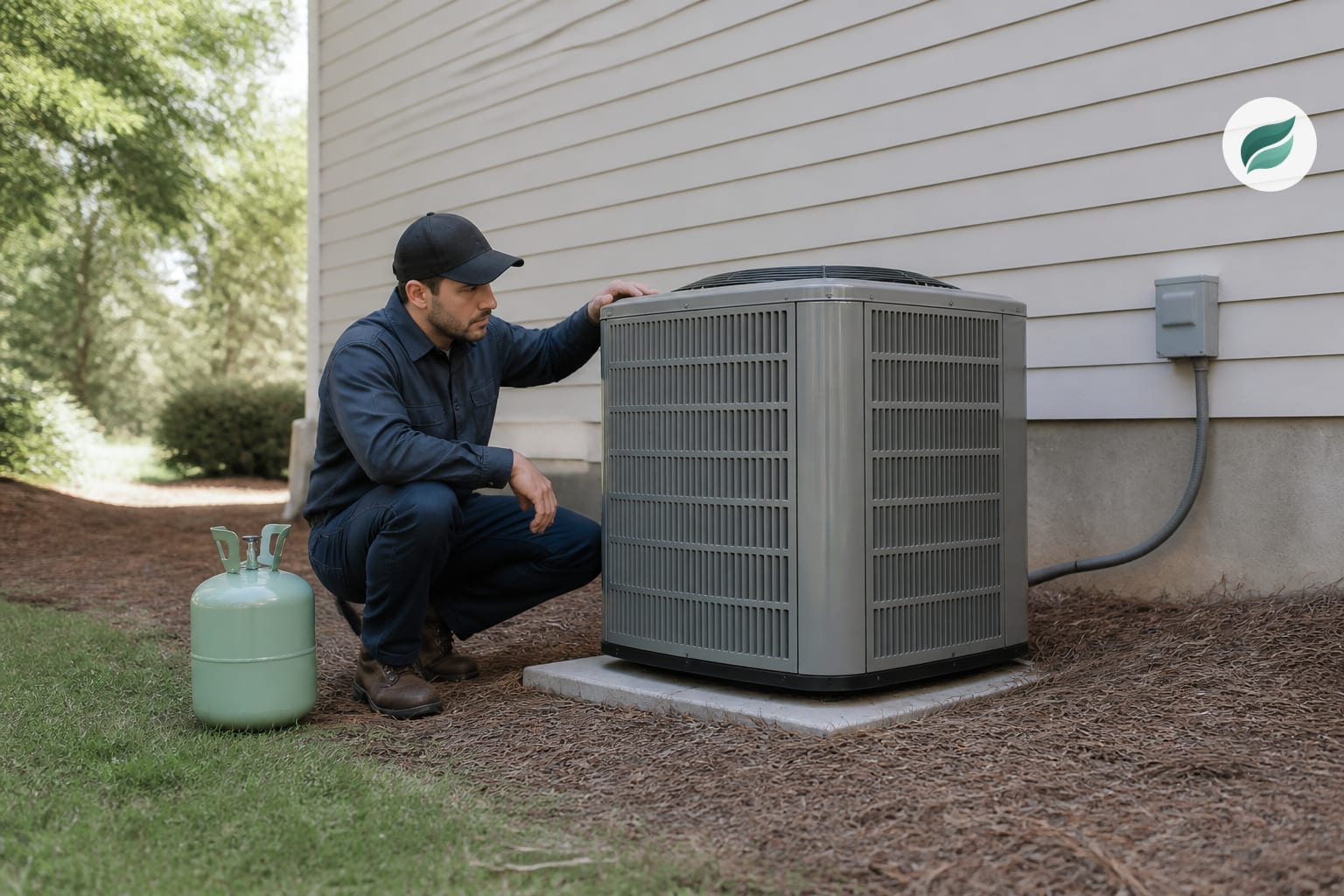
Use leak rate to find ongoing losses, not to shame a tech
Calculate leak rate simply, interpret it in context, and pick the right fix based on what it actually shows.
The single most useful point: leak rate tells you how fast the system is losing refrigerant, not who messed up.
What leak rate is and why it matters
Leak rate is the percentage of total refrigerant charge lost over a specified period. It helps decide whether you need a repair, a temporary top-off, or a full containment approach. Treat it as a diagnostic symptom, not the whole diagnosis.
How to calculate leak rate quickly
Use two honest measurements: the starting charge and the charge after a known interval. Subtract the later charge from the starting charge, divide by the starting charge, then multiply by 100 for percent lost. If you measured over days, weeks, or months, convert the period so you can compare rates consistently (for example, percent per year).
Example: start 10 lb, later 9 lb after one month. Loss = 1 lb, rate = 1/10 = 0.1, so 10% per month. Extrapolate carefully, short-term spikes can exaggerate annualized rates.
What numbers mean in practice
Low, slow leak: small percent over months suggests a slow weep or valve weep. Often repairable during scheduled service. Rapid leak: several percent in days means an active breach that needs immediate attention. No leak: tiny variance can be scale or scale reading error, refrigerant migration, or thermal expansion; verify with gauges and leak detector.
Common pitfalls that skew your read
- Wrong baseline charge. Never calculate from an unknown starting point.
- Temperature and pressure changes. They affect gauge readings; use liquid-line or vapor-line measurements consistently.
- Adding refrigerant between checks without noting it. That hides true loss.
- Short measurement windows. Small sample times amplify measurement error.
How to use the result on the job
If the leak rate is small, schedule targeted leak detection and plan for repair at the next visit. If fast, stop the system, isolate, and repair urgently. Always document measurements, dates, and any adds or venting so future leak-rate calculations are valid.
Quick checklist for field use:
- Record start charge, date, and operating conditions
- Recheck with same method and note any adds
- Calculate percent lost and period
- Decide whether immediate repair, scheduled repair, or further diagnostics
Treat leak rate as a tool to prioritize work and communicate urgency, not as a final verdict on system health.