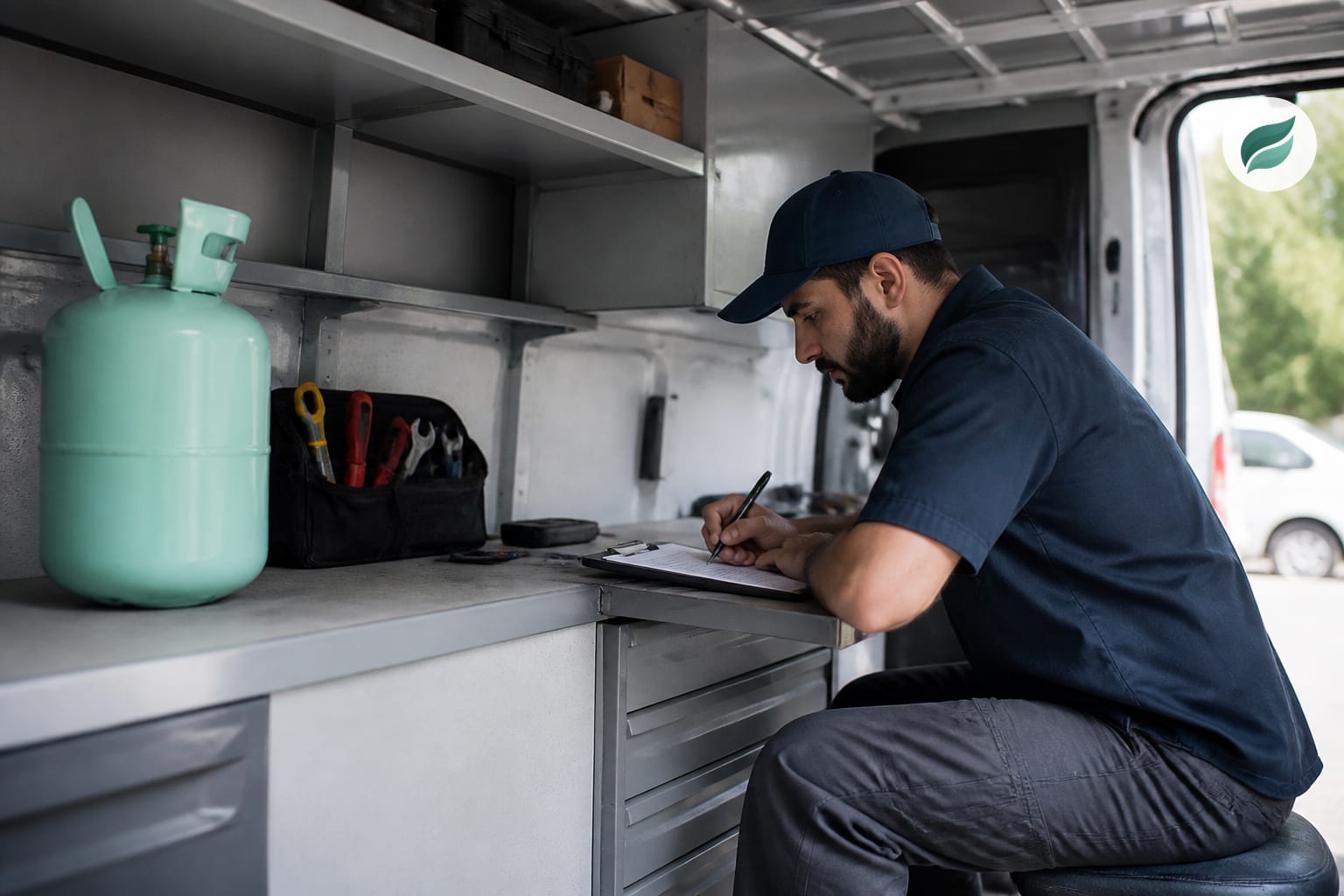
Prepare your shop for A2L refrigerants now
A2L refrigerants are lower in global warming potential but require changes in training, paperwork, leak response, and equipment, start with a plan and checklist.
The single most useful point: treat A2L adoption as a project, not a drop-in swap.
What makes A2Ls different
A2L refrigerants are mildly flammable. That changes how you store, transport, install, and service systems. You will need new risk controls, updated jobsite procedures, and staff training, even if core service skills stay the same.
First steps for your shop
Begin with a simple gap assessment. Check what you already have for storage, ventilation, recovery equipment, leak detection, and PPE. Identify which assets and procedures need updating, and prioritize low-cost, high-impact fixes like ventilation and leak detection.
Training and paperwork
Train every tech on A2L properties, safe handling, and emergency response. Update job documentation so each A2L job logs refrigerant type, charge amount, leak checks, and disposal method. Make sure techs can quickly show a job file that lists the refrigerant used and any special handling notes.
Equipment and tools to review
Some existing recovery machines, scales, and leak detectors work with A2Ls, others do not. Confirm compatibility with manufacturers before using existing equipment. For new purchases, choose tools built for mildly flammable refrigerants and label them for A2L service only.
Jobsite controls and procedures
Set clear rules for ignition sources, hot work, confined spaces, and ventilation on A2L jobs. Use forced ventilation and continuous leak detection when practical. Require gas monitoring for enclosed spaces and stop work if alarm thresholds are exceeded.
Leak response and disposal
Treat any suspected leak with caution. Evacuate and ventilate, control ignition sources, and follow your updated emergency plan. Record leaks and repairs in your job documentation so you can spot recurring issues and adjust practices.
Communication and customer conversations
Tell customers why you recommend A2L-compatible equipment or practices, focusing on safety and environmental impact in plain language. Provide a one-page handout that explains what to expect during service and any new maintenance requirements.
Keep it iterative
Start small with one pilot crew or a subset of jobs. Gather feedback, fix procedures, and expand. Small, documented wins make it easier to scale safe A2L work across the whole shop.