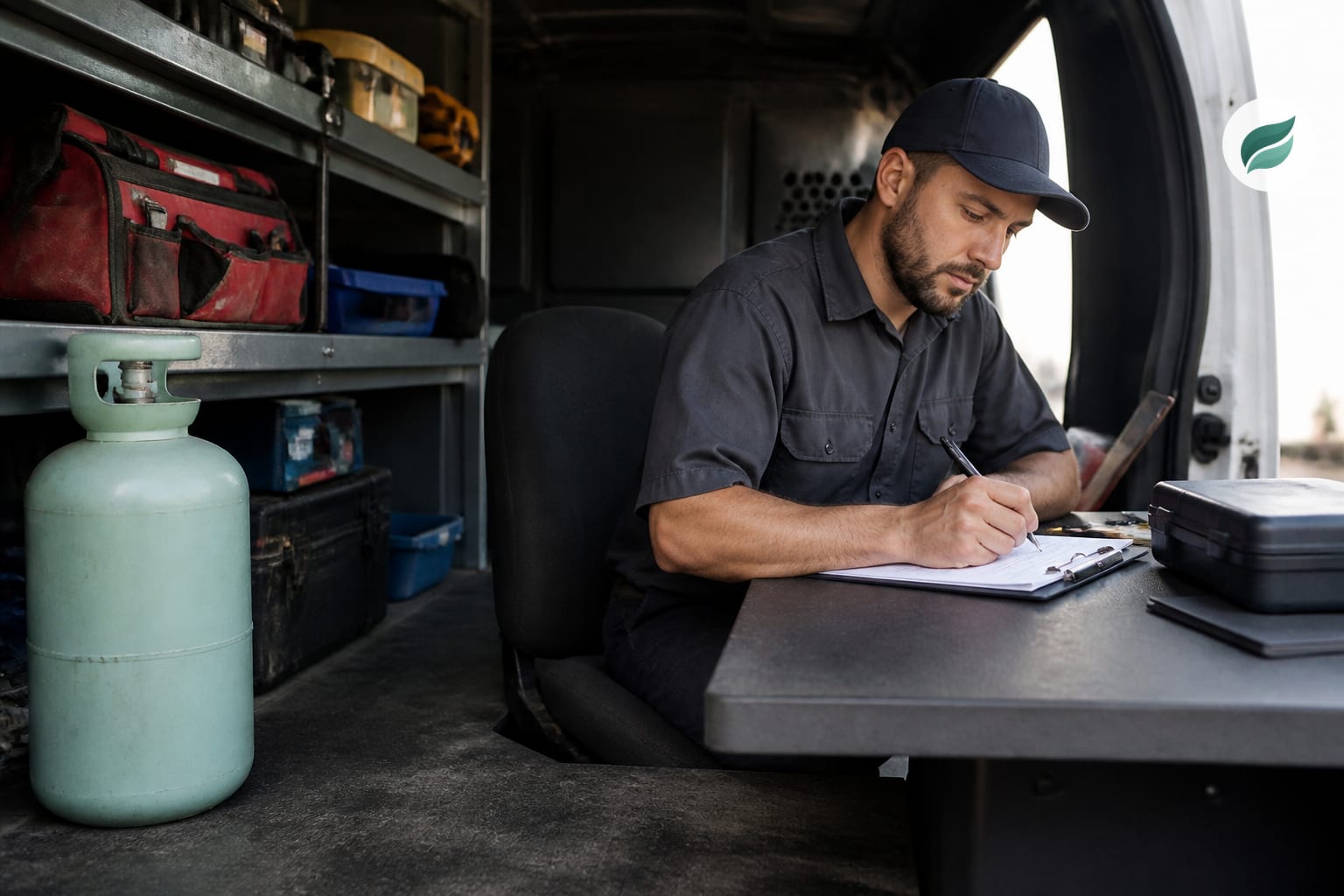
Handle refrigerant like a pro: safety-first steps for techs
Simple, practical actions that reduce risk on the truck, at the job, and during recovery.
Always assume a leak can injure someone or violate regs, so prioritize containment and safe handling first. Wear eye protection and gloves any time you touch refrigerant lines, cylinders, gauges, or oil. That single habit prevents most contact injuries and limits contamination.
Before you start
Check cylinder condition, labels, and valve caps. A dented, rusted, or unlabeled cylinder is a hazard and should not be used. Use only equipment rated for the refrigerant you will handle, including hoses, fittings, and recovery machines.
On the truck and at the jobsite
Keep refrigerant cylinders upright and secured in transit. Store full and empty cylinders separately and cap open valves. Work in well ventilated areas when possible. If you must work in tight indoor spaces, monitor for oxygen displacement and combustion risk, and ventilate before entry.
Safe transfer and charging
Purge hoses before connecting to avoid cross-contamination. Use a scale for charging to prevent overfill. Open valves slowly, and never heat a cylinder to force flow. When transferring, keep transfer lines short, leak-checked, and supported to prevent kinks and vibration damage.
Recovery and leak response
Recover refrigerant to approved cylinders using a dedicated recovery unit. Do not vent refrigerant to the atmosphere. If you detect a leak, stop work, isolate the circuit, and repair the leak before recharging. For any significant or uncontrolled release, evacuate and ventilate the area, then follow workplace emergency procedures.
Personal protective equipment and exposure
Use chemical-resistant gloves and splash goggles when handling liquid refrigerant or oil. If skin contact occurs, flush with cool water for at least 15 minutes and seek medical help for frostbite or prolonged exposure. If inhalation symptoms appear, move the person to fresh air and get medical attention.
Labeling and paperwork
Keep cylinder labels intact and legible. Track recovered quantities and cylinder serials as part of good shop practice. Proper documentation helps with safety follow-up and any regulatory reporting that may apply.
Quick checklist
- Inspect cylinder condition and labels
- Use rated hoses and recovery gear
- Wear gloves and eye protection
- Purge hoses and weigh charges
- Recover refrigerant to approved cylinders
- Ventilate and evacuate for major leaks
Safe refrigerant handling is mostly discipline: consistent PPE, correct equipment, and refusal to shortcut recovery or charging steps will prevent most incidents.