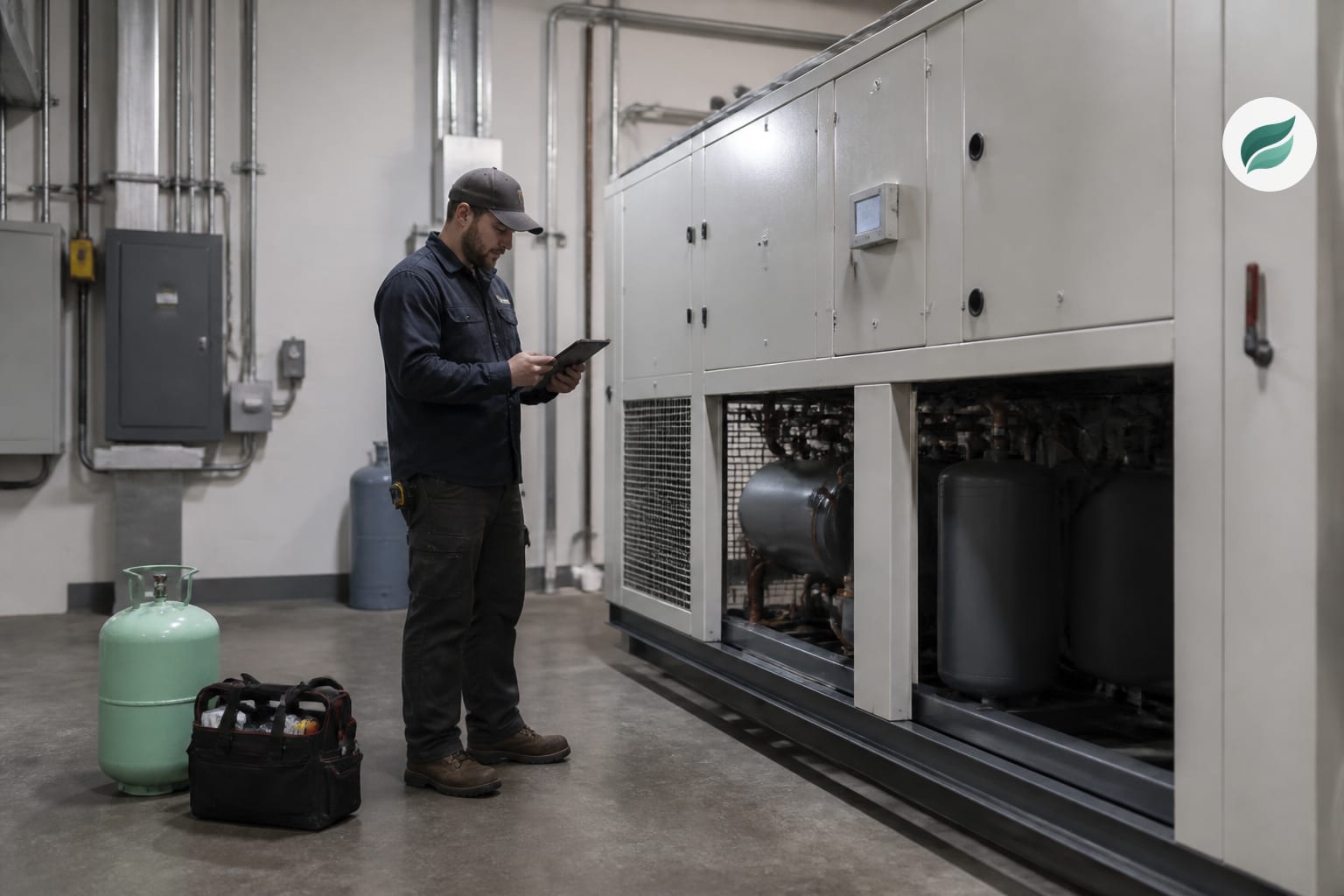
Handle refrigerant like a hazard, not a mystery
Treat refrigerant as a controlled substance: know what you have, protect yourself, and keep accurate records.
The single most useful point: always treat refrigerant as a hazardous, regulated material and use proper PPE, leak prevention, and documentation every time.
Know the refrigerant before you touch it
Identify the refrigerant type and charge amount before starting work. Different refrigerants require different gauges, oils, recovery equipment, and disposal procedures. Read cylinder labels, system nameplates, and service records so you can bring the right tools and PPE.
Personal protection and ventilation
Wear chemical-resistant gloves and safety glasses at minimum. Use face shields when brazing or recovering pressurized vapor. Work outdoors or in well ventilated spaces when charging or recovering to avoid oxygen displacement and exposure to decomposition products. If you suspect a large leak or decomposition from fire, use supplied-air or SCBA per your shop safety plan.
Equipment and procedures that reduce risk
Use recovery machines and vacuum pumps rated for the refrigerant you are handling. Leak before you charge: evacuate and pressure test with dry nitrogen to find leaks rather than topping off. Use appropriate manifold gauges and hoses, and never mix refrigerant types in gauges, hoses, or recovery tanks. Label service valves and isolate the circuit you are working on.
Safe handling of cylinders and recovered refrigerant
Treat cylinders like compressed gas: secure them standing, cap valves when not in use, and keep them away from heat. Use recovery tanks only for their intended refrigerant, and never vent refrigerant to atmosphere. Store returned or recovered refrigerant in clearly labeled cylinders for proper reclamation or disposal.
Recordkeeping and legal basics
Keep clear records of refrigerant added, recovered, and disposed of for each job. Accurate logs help track leaks, satisfy audits, and guide future service decisions. Follow your local regulations and your company safety procedures for reporting large leaks or required repairs.
Common mistakes to avoid
- Mixing refrigerant types in tools or cylinders.
- Skipping nitrogen pressure testing and relying on "top-offs."
- Improper PPE when brazing or recovering.
Handle refrigerant like fuel or a chemical solvent: plan the job, protect yourself, and document what you do. It keeps people safe, equipment healthy, and headaches low., LYRA, research writer